Cute Sloth and Flowers Watercolor Illustrations for Crafts
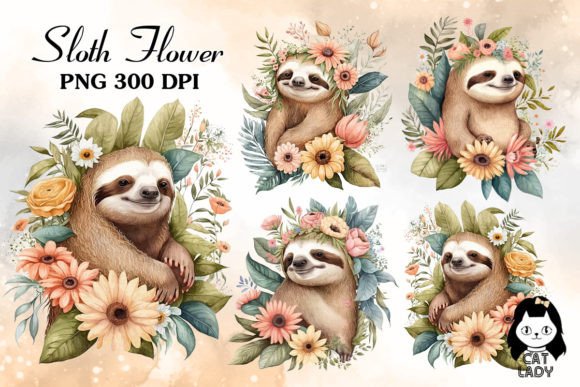
As a handmade business owner who has tested hundreds of digital assets for my Etsy shop, I approach every new graphic design asset with a critical eye. When I first opened the Cute Sloth and Flowers Watercolor file, I wasn't just looking at pretty art; I was evaluating its viability for real production. My immediate impression was that this illustration strikes a delicate balance between playful nursery aesthetics and sophisticated botanical elegance. The watercolor texture feels organic and soft, avoiding the harsh, artificial look that plagues many digital clipart files. For crafters targeting the baby shower, nursery decor, or cozy stationery markets, this asset immediately suggests a premium, hand-painted quality that customers associate with high-end handmade goods rather than mass-produced print-on-demand items.
Real-World Application for Sublimation and Print Products
In my current workflow, I am preparing a spring collection of ceramic mugs and tumbler wraps for an upcoming craft fair. This is where the Cute Sloth and Flowers Watercolor asset truly shines. Because watercolor relies on subtle gradients and transparency, it is inherently better suited for sublimation design and direct printing than for vinyl cutting. I tested the PNG design on both white and cream-colored tumblers, and the color fidelity remained excellent. The floral elements frame the sloth beautifully, creating a natural border that works perfectly for curved surfaces without needing extensive editing.
For those running a small business branding campaign or creating custom packaging, this illustration serves as an exceptional focal point. I used it to design thank-you cards and sticker sheets for customer orders. The soft colors print beautifully on matte sticker paper, giving the final product a tactile, artisanal feel. If you are creating printable wall art or nursery signage, the resolution holds up well at standard frame sizes. However, always verify your specific file’s DPI before committing to large-format prints. In my test batch, the details in the flower petals remained crisp at 8x10 inches, making it a reliable choice for digital product listings or physical art prints.
Navigating Vinyl Cutting and Cricut Projects
While this asset is a star for printing, crafters using Cricut or Silhouette machines need to exercise caution. Watercolor illustrations are raster-based images, meaning they are made of pixels rather than vectors. If you intend to use this for a t-shirt design involving heat transfer vinyl (HTV), you cannot simply cut the watercolor image directly. You must treat this as a printable sticker design or use the "Print then Cut" feature. Attempting to convert complex watercolor shading into an SVG design for layered vinyl usually results in jagged edges and lost detail.
If you absolutely want to incorporate this sloth into a vinyl project, I recommend using it as a background element for a decal or pairing it with simple, bold text overlays. For example, I created a tote bag design where the Cute Sloth and Flowers Watercolor served as a printed center panel, surrounded by solid vinyl lettering. This hybrid approach leverages the beauty of the illustration while maintaining the durability and readability required for wearable merchandise. Always test your Print then Cut registration marks on scrap material first, as watercolor textures can sometimes confuse optical sensors if the contrast is too low near the edges.
Technical Checks Before Listing Your Handmade Products
Before adding any item featuring this asset to your creative marketplace shop, you must perform due diligence. As experienced makers know, a beautiful screen preview does not guarantee a flawless finished product. Here are the practical checks I performed that you should replicate:
- Transparency Verification: Open the PNG design in your editing software and place a colored layer behind it. Ensure the background is truly transparent and not white. Some clipart files have white backgrounds disguised as transparency, which ruins dark t-shirt designs.
- Color Profile Matching: Watercolors often shift from RGB (screen) to CMYK (print). Print a test swatch on your actual substrate. I noticed the greens in this illustration printed slightly darker on fabric than on paper, requiring a brightness adjustment in my printer settings.
- Scaling Integrity: Resize the illustration to your smallest intended use, such as a 1-inch planner sticker. If the sloth’s face becomes muddy or the flowers lose definition, establish a minimum size limit for your product listings.
- Font Pairing: The organic nature of this illustration demands the right typography. Avoid rigid, industrial fonts. I found that pairing it with a flowing script font for names and a clean sans serif for dates created the most professional look for wedding or baby shower invitations.
Commercial Licensing and Business Strategy
One of the most critical aspects of using any design bundle for an Etsy product or local market stall is understanding the commercial license. Never assume that purchasing a graphic design asset grants unlimited rights. Check specifically whether the license covers physical end products versus digital redistribution. For this Cute Sloth and Flowers Watercolor set, ensure you are compliant if you plan to use it for print-on-demand services, as some licenses restrict POD usage even if they allow handmade sales.
From a business strategy perspective, this illustration offers excellent versatility for seasonal collections. While sloths are often associated with tropical themes, the floral accompaniment here allows it to transition into spring and summer nursery lines effortlessly. I recommend creating a cohesive collection: use the full illustration for tumbler wraps, extract individual flowers for gift tags, and use the sloth alone for apparel. This maximizes the value of a single design asset across multiple price points in your shop.
Where to Exercise Caution in Design Layouts
Honesty in crafting reviews means acknowledging limitations. This Cute Sloth and Flowers Watercolor asset is not suitable for every project. Avoid using it for intricate laser cutting or engraving, as the watercolor wash lacks the distinct vector paths required for clean burns. Similarly, be wary of using it on dark fabrics without a white underbase, as the pastel tones will disappear against black or navy cotton.
Additionally, if your target audience prefers minimalist, high-contrast modern design, this may feel too whimsical. It is distinctly geared toward feminine, cozy, and juvenile aesthetics. When designing product mockups, ensure the background complements rather than competes with the watercolor texture. A busy mockup background can make the soft edges of the illustration look unintentionally blurry. Use clean, neutral mockups to let the artwork stand out.
Final Thoughts for Creative Entrepreneurs
Ultimately, the Cute Sloth and Flowers Watercolor asset is a valuable addition to a crafter's library, provided it is used within its strengths. It excels in sublimation, printable stationery, and nursery decor, offering a warmth that pure vector art often lacks. For the handmade business owner, it represents an opportunity to create emotionally resonant products that appeal to gift-givers and parents. By respecting the technical constraints of watercolor media and verifying your commercial rights, you can transform this charming illustration into a profitable line of unique, handcrafted goods. Remember, the success of your product lies not just in the asset itself, but in how thoughtfully you integrate it into your specific crafting workflow and brand identity.