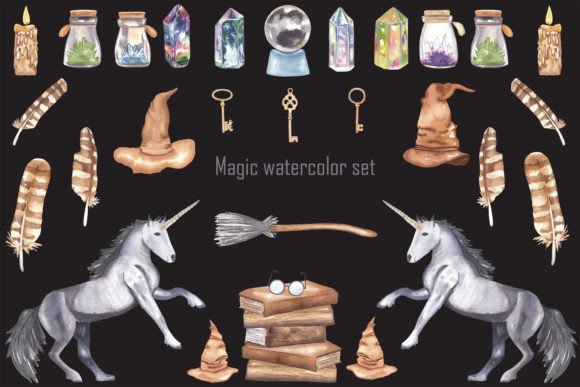
Magic Watercolor Png Clipart for Embroidery
As a professional embroidery designer and product reviewer, I approach every new digital asset with a specific question: will this actually translate to thread? When evaluating Magic Watercolor Png Clipart Sublimation, my focus shifts immediately from screen resolution to stitch integrity. While this asset is categorized under Illustrations and primarily marketed for sublimation, its soft edges and organic color blending present a unique opportunity—and challenge—for machine embroidery design. The dreamy, fluid aesthetic of watercolor art is notoriously difficult to replicate with needle and thread, but when executed correctly, it elevates a handmade product from basic craft to boutique quality.
First Impressions and Artistic Translation
My initial assessment of Magic Watercolor Png Clipart Sublimation reveals a design rich in mood and visual personality. The artwork features soft gradients and ethereal transitions that evoke a sense of whimsy and nostalgia. For an embroidery project, this means we are not looking at rigid lines or high-contrast vector art. Instead, we are dealing with tonal shifts that require careful digitizing interpretation. The layout feels balanced, suggesting it would serve beautifully as a centerpiece rather than a border element. As a designer, I appreciate that the clipart avoids overly intricate micro-details that often get lost in translation. The shapes are distinct enough to support fill stitch areas without becoming a muddy mess of thread, which is crucial for maintaining clarity on fabric.
Real-World Application: The Custom Sweatshirt Test
To truly judge the viability of this asset, I mentally placed it into a current client request: a custom apparel order for a small shop product line featuring pastel nursery themes. Specifically, I evaluated Magic Watercolor Png Clipart Sublimation for use on a heavyweight cotton sweatshirt intended as a personalized gift for new mothers. In this scenario, the design needs to be large enough to showcase the watercolor effect but stable enough to prevent puckering on fleece-backed fabric.
For this sweatshirt embroidery application, the soft nature of the illustration suggests using a light touch with stitch density. Heavy satin stitch borders would clash with the delicate artwork. Instead, I envision utilizing running stitch outlines combined with complex fill stitches that mimic brush strokes. This approach preserves the "magic" of the original PNG while ensuring the garment remains soft and wearable. Customers buying from Etsy sellers or boutique brands expect commercial embroidery to feel integrated with the fabric, not like a stiff patch glued on top. This design asset supports that expectation by allowing for breathable digitizing techniques that honor the source material's fluidity.
Navigating Fabric Textures and Hoop Constraints
While the artistic potential is high, practical limitations exist. Magic Watercolor Png Clipart Sublimation requires thoughtful placement regarding fabric texture and hoop size. Watercolor effects rely on subtle color variation; if you stitch this onto a highly textured terry cloth towel or a ribbed knit, those nuances will disappear. I recommend reserving this design for smooth, tight-weave fabrics like quilting cotton, poplin, or high-quality jersey knits where the thread can lay flat and reflect light similarly to ink on paper.
Hoop size is another critical factor. Because watercolor art loses impact when shrunk too small, I advise against using this for tiny 4x4 hoop projects unless significant simplification occurs. Detailed corners and tiny lettering often associated with these illustrations may need to be removed or enlarged to prevent needle breaks and thread bunching. Conversely, when scaling up for tote bag design or pillow covers, ensure your stabilizer choice matches the increased stitch count. A cut-away stabilizer is non-negotiable for stretchy fabrics to maintain registration between the multiple color changes required to simulate watercolor blending.
Enhancing Product Value and Buyer Trust
Using high-quality assets like Magic Watercolor Png Clipart Sublimation directly impacts perceived value. In the saturated market of digital product sellers and craft business owners, differentiation is key. A finished product featuring this style of art signals professionalism and attention to trend. Buyers recognize the difference between generic clipart and thoughtfully adapted embroidery. When listing items on platforms like Etsy, using printable mockup previews derived from this same PNG ensures consistency between what the customer sees online and the physical embroidered patch or garment they receive. This alignment builds trust and reduces return rates due to unmet expectations.
Furthermore, the versatility of this illustration category allows for cross-product branding. The same design used for baby embroidery on a bib can be adapted for holiday embroidery on gift tags or kitchen linens. This cohesion helps small business owners create recognizable collections rather than disjointed one-off items. However, always verify licensing before selling finished goods or offering the digital embroidery file itself. Commercial embroidery rights vary, and protecting your business starts with respecting intellectual property.
Essential Designer Notes for Success
Before committing Magic Watercolor Png Clipart Sublimation to a final production run, adhere to these practical testing protocols:
- Test Stitch on Scrap Fabric: Never assume screen colors match thread colors. Run a test sew-out on the exact fabric you intend to use for the final handmade product.
- Evaluate Thread Color Contrast: Watercolor relies on low contrast. Ensure your thread palette has enough distinction so the design doesn't look flat. Use matte threads for a painterly finish rather than high-sheen rayon.
- Check Stitch Density: Review the digitized file to ensure coverage is adequate without being bulletproof. Adjust pull compensation settings to account for fabric stretch during stitching.
- Mockup in Black and White: Before selecting thread colors, view the design in grayscale. If the image looks muddy without color, the value structure is weak, and the embroidery will lack definition.
- Stabilizer Verification: Confirm your stabilizer weight supports the design's complexity. For dark fabrics, consider a topping to prevent fibers from poking through light-colored watercolor fills.
- Licensing Confirmation: Double-check whether the asset permits modification, digitizing for resale, or only personal use. This is vital for Etsy sellers and commercial embroidery businesses.
Final Thoughts on Creative Adaptation
Magic Watercolor Png Clipart Sublimation offers a beautiful foundation for creative entrepreneurs willing to bridge the gap between digital art and textile craft. It is not a plug-and-play solution for beginners, but for experienced makers, it provides a pathway to sophisticated, emotionally resonant products. Whether you are creating a custom apron, a nursery blanket, or branded merchandise, success lies in respecting the medium. By prioritizing fabric compatibility, appropriate scale, and meticulous digitizing, you transform a simple PNG into a cherished, tangible piece of art. Always remember that in embroidery, the best design is one that serves both the aesthetic vision and the structural reality of the stitch.