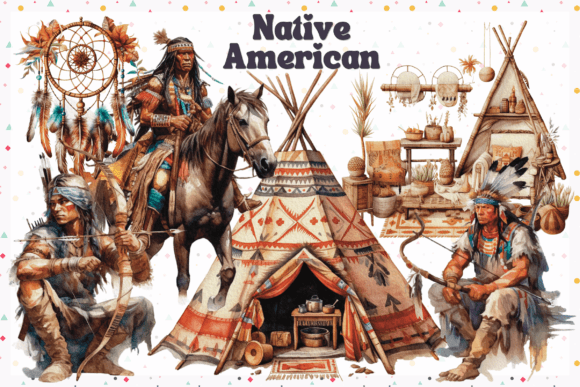
Native Americans in Watercolor Clipart Review
As an embroidery digitizer and product reviewer, I approach every new set of illustrations with a specific question: will this translate from screen to stitch without losing its soul? When evaluating Native Americans in Watercolor Clipart, my focus shifts immediately from digital aesthetics to tactile reality. Watercolor art is inherently fluid, soft, and unpredictable, while machine embroidery is structured, dense, and precise. Bridging that gap requires careful consideration. This review explores how these specific illustrations perform when adapted for real-world projects, from custom apparel to boutique merchandise, ensuring your next embroidery project honors both the art and the medium.
First Impressions: Mood and Visual Translation
My initial assessment of Native Americans in Watercolor Clipart centers on emotional resonance and compositional balance. These illustrations typically carry a sense of heritage, tranquility, and artistic reverence. The watercolor style suggests soft edges and blended tones rather than harsh lines. For an embroidery designer, this is both a blessing and a challenge. The mood is perfect for meaningful, personalized gifts or culturally respectful boutique items, but the lack of defined borders means we cannot rely on standard satin stitch outlines to define the shape.
Visually, the layout of these clipart files often features organic shapes that resist rigid hooping. Unlike geometric logos, the flow of watercolor demands a digitizing approach that mimics brushstrokes through thread direction. If you are planning a sweatshirt embroidery or a nursery decor piece, the visual personality of this art suggests a matte finish and variegated thread colors over high-sheen rayon. The design assets feel best suited for projects where texture matters as much as color, making them ideal for linen tea towels, canvas tote bag designs, or unstructured cotton apparel.
Real-World Application: The Custom Tote Bag Test
To truly judge viability, I mentally place Native Americans in Watercolor Clipart onto a natural canvas tote bag. This is a common request for Etsy sellers and craft business owners looking for unique, handmade products. Canvas provides the necessary stability for complex fill stitches, but it also has a distinct weave that can swallow fine details.
In this scenario, the watercolor effect must be achieved through strategic stitch density and layering. A direct conversion of the raster image would result in a stiff, bulletproof patch of thread. Instead, successful adaptation requires using running stitches and light fill patterns to create transparency. For a tote bag design, I look for negative space within the illustration. Can the fabric show through to reduce bulk? Does the composition allow for personalization, such as adding a name or date below the artwork? When executed correctly, the finished product feels artisanal and high-value. Customers respond to this level of intentionality; they can tell the difference between a generic print and a thoughtfully digitized embroidery file that respects the original watercolor aesthetic.
Navigating Fabric Limitations and Hoop Constraints
While these illustrations are versatile, they demand respect for material limitations. Watercolor-style machine embroidery designs are generally denser than line art. This creates specific risks depending on your substrate:
- Stretchy Fabrics: Applying detailed Native American watercolor art to performance wear or thin jersey knits is risky. The stitch density required to replicate color blending can cause tunneling or distortion. Always use a heavy-duty cut-away stabilizer and consider a topping to prevent stitches from sinking into the knit.
- Textured Surfaces: On terry cloth towels or fleece blankets, fine watercolor details will disappear. You may need to simplify the design or add a knockdown stitch base to create a smooth canvas for the art.
- Curved Items: Caps and hats present significant challenges for watercolor illustrations. The curved surface distorts horizontal gradients. If using this clipart for headwear, select compositions that are vertically oriented or centrally focused, avoiding wide, sweeping landscapes that wrap around the brim.
- Small Hoop Sizes: Reducing complex illustrations to fit a 4x4 hoop often destroys the watercolor effect. Gradients become muddy blocks of color at small scales. Verify the minimum recommended size before purchasing or digitizing to ensure the artistic integrity remains intact.
Impact on Product Value and Brand Perception
For creative entrepreneurs and small shop owners, the choice of design directly influences perceived value. Native Americans in Watercolor Clipart occupies a niche that signals sophistication and cultural appreciation. However, this comes with a responsibility for accuracy and respect. Poorly executed embroidery of indigenous themes can look cheap or appropriative. High-quality execution, conversely, elevates your brand.
When used in commercial embroidery or digital product sales, consistency is key. If you offer this as part of a collection, ensure the stitch styles match across different files. Buyers engaging with printable mockups need to see realistic representations of how the thread interacts with the fabric. A well-digitized watercolor design increases buyer engagement because it promises a premium handmade product rather than mass-produced fast fashion. It builds trust by showing that you understand the nuances of translating delicate art into durable thread.
Critical Designer Notes for Successful Execution
Before you load this embroidery file into your machine or list it in your Etsy shop, adhere to these practical protocols:
- Verify Licensing First: "Clipart" does not automatically mean "commercial embroidery ready." Confirm whether the license allows for physical product sales, digital file resale, or both. Never assume usage rights based on category alone.
- Test Stitch Density: Print a full-size template of the design and tape it to your target fabric. Check if the scale works visually. Then, stitch a test run on scrap fabric using the exact stabilizer combination you plan for the final project. Inspect the back; excessive jump stitches or bobbin thread visibility indicates poor digitizing.
- Evaluate Thread Contrast: Watercolor relies on subtle shifts. Test your thread colors in natural lighting. What looks distinct on a monitor may blend into a single muddy tone on fabric. Variegated threads can enhance the painterly effect but require testing to ensure color changes align with the design's intent.
- Check Small Details: Zoom in to 100% in your software. Are there tiny elements that will turn into thread nests? Simplify or remove details smaller than 1mm. Embroidery is an impressionist medium at small scales; suggest detail rather than forcing it.
- Mockup Realism: When creating listings for custom apparel or holiday embroidery, avoid flat digital overlays. Use photos of actual test stitches or high-quality textured mockups that show thread sheen and fabric grain. This manages customer expectations and reduces returns.
- Washability Assessment: If the end use involves frequent laundering (like baby clothes or kitchen towels), stress-test your sample. Watercolor fills can sometimes pull apart after washing if underlay isn't sufficient. Ensure the design survives real-life use, not just the initial photo shoot.
Native Americans in Watercolor Clipart offers beautiful potential for makers who value artistry in their embroidery projects. By approaching these illustrations with technical discipline and cultural mindfulness, you transform digital pixels into tangible heirlooms. Whether you are crafting a personalized gift or building a commercial embroidery line, let the fabric and the thread guide your interpretation of this evocative art style.